HVAC installation, repair
and maintenance in New York City.
We do HVAC right.
YATSON installs and services modern, energy-efficient air-conditioning and heat-pump systems for homes and businesses across New York — built on European attention to detail, delivered to NYC standards.
- 4 Boroughs served
- Free On-site estimates
- Clear Written project scope
- EPA 608 Universal Certified technician
- OSHA 30 construction safety trained
- NYC DOB SST card holder
- Residential & commercial HVAC
Our services
Air conditioning & heat pumps, end to end
YATSON handles installation, replacement, maintenance and repair — modern cooling and heating for homes and businesses across New York.
Mini-split installation
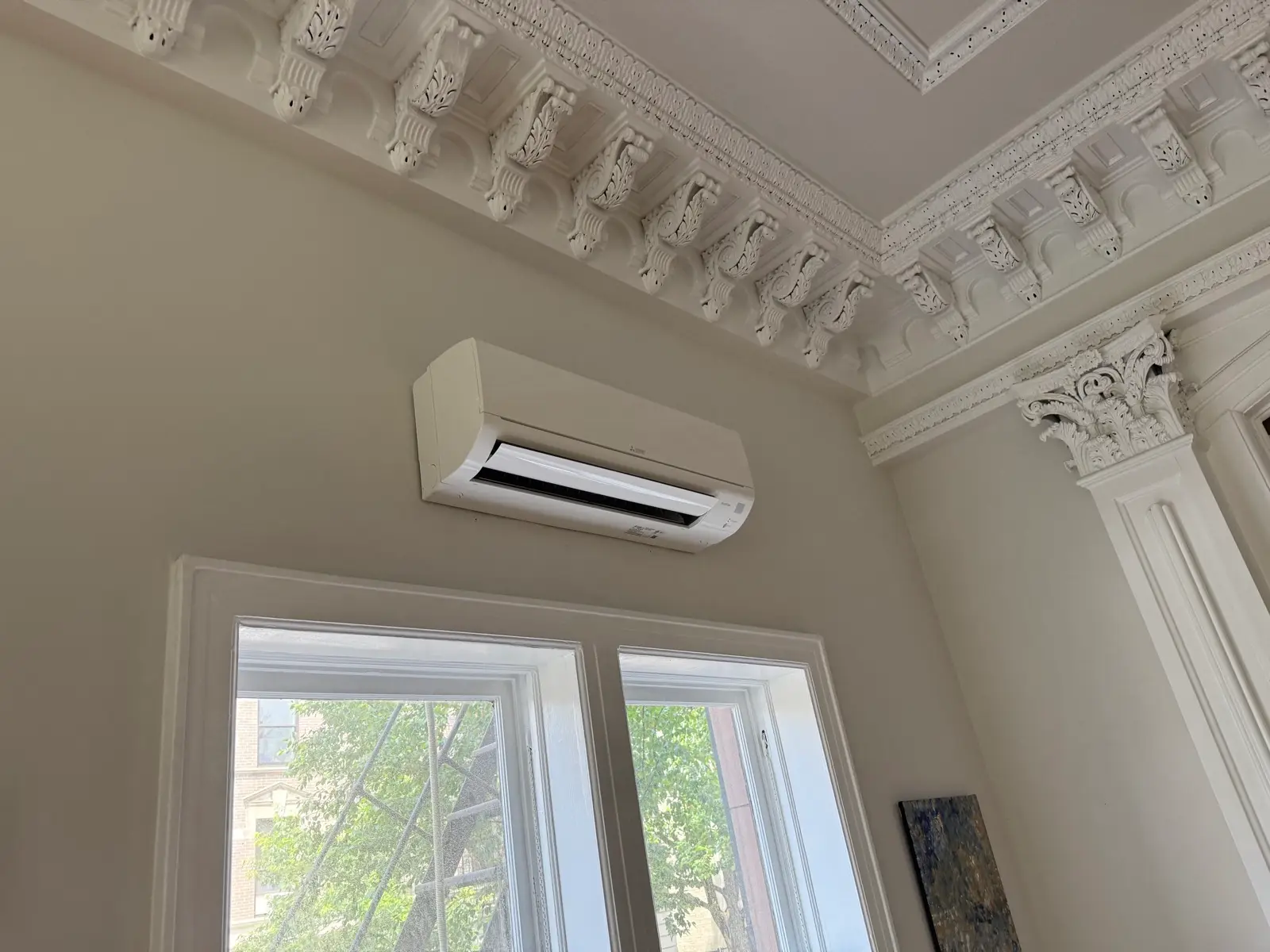
Ductless mini-split systems for precise, room-by-room comfort. Right-sized, cleanly installed and quiet — heating and cooling in one.
Learn moreCentral air installation
Whole-home central air conditioning, planned and installed for even airflow, efficiency and reliable performance.
Learn moreDeep system cleaning
Thorough cleaning of coils and indoor units plus filter replacement — better air quality, higher efficiency and a longer system life.
Learn moreMaintenance contracts
Scheduled preventive maintenance that keeps your system efficient, catches issues early and protects your investment.
Learn moreRepair & diagnostics
Accurate diagnostics and reliable repair for any AC or heat-pump system — we find the real cause before replacing parts.
Learn moreHow it works
From request to results in four simple steps
Clear, professional and convenient — the way every YATSON project runs.
- 1
Send a request
Fill out the short form on our site — it takes a minute.
- 2
We call you back
We call to clarify the details of the job and discuss the cost with you.
- 3
Our specialist arrives
A YATSON HVAC specialist comes to your address at the confirmed time.
- 4
Done — pay after
The work is completed, and you pay only once it is finished.
Trusted equipment
We work with the brands you can rely on





YATSON partners with trusted suppliers in New York and installs modern, energy-efficient systems from leading manufacturers.
Why YATSON
A company that stands behind its work
YATSON brings European attention to detail to every New York project — careful installation, honest communication and results that last.
- HVAC service planned around actual site conditions
- Scope, pricing and warranty terms documented before work
- We work with trusted suppliers in NY
- Modern, energy-efficient models at fair prices
- Clear scope before project work begins
- Clean, careful work and clear communication
Certifications & safety
Certifications & Safety Credentials
We do more than install and repair HVAC equipment: we plan each job carefully, control electrical and mechanical hazards, protect your property, and follow disciplined safety practices from setup through final testing.
EPA Section 608
Universal Certified Technician
Federal EPA certification to handle regulated refrigerants — all categories of stationary equipment. Does not expire.
OSHA 30
Construction Safety & Health Trained
30-hour construction-safety training: fall prevention, electrical hazards and safe job-site practices.
NYC DOB SST
40-Hour Site Safety Training Card
NYC Department of Buildings site-safety training required on qualifying New York City construction sites.
NFPA 70E
Electrical Safety Trained
Shock and arc-flash hazard training for safe electrical diagnostics and service work.
Lockout/Tagout
Hazardous-Energy Control Trained
Safe equipment isolation before service to prevent accidental startup or stored-energy release.
Heights & Rigging
Working-at-Height & Lifting Safety
Safe rooftop work, controlled equipment lifts and load handling for outdoor and rooftop units.
Credentials held by the company's lead technician. Documentation available upon request.
Competitive prices, the honest way
Our prices are competitive because we run the work efficiently — clear responsibilities, sensible planning, good communication and a focus on installation quality, without padded costs that bring the client no real value.
Replacing your system? Get up to $8,000 back
Qualifying heat-pump installations can receive up to $8,000 through Con Edison Clean Heat — up to $10,000 in eligible neighborhoods. We’ll check whether your address qualifies and help with the application.
Monthly payment options available — ask during your estimate.
Get a free estimateOur work
Our recent work across New York
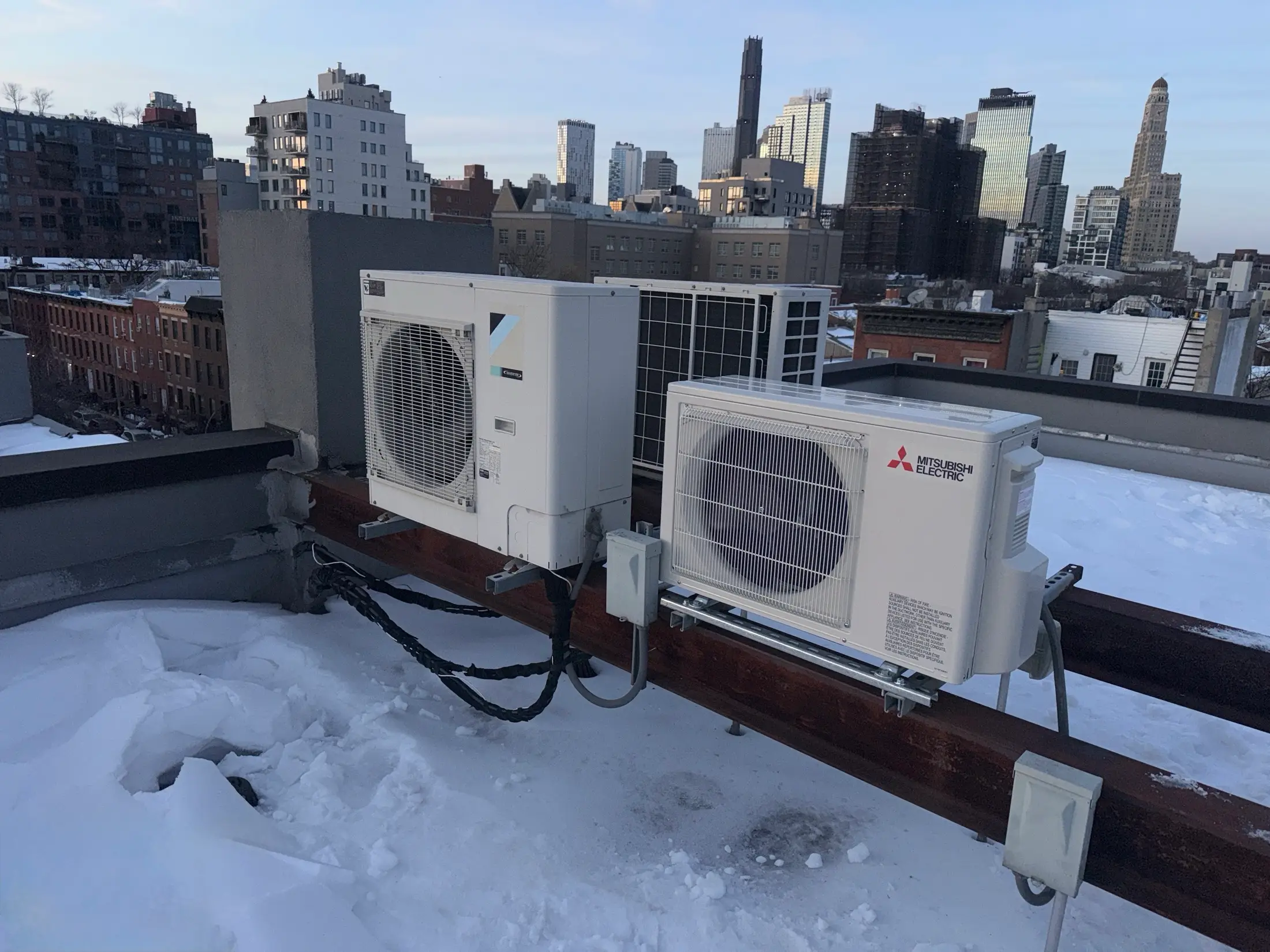
Installations, replacements and service — mini-splits, central air and rooftop systems from Daikin, Mitsubishi Electric, Fujitsu and more.
Ready for reliable comfort?
Send a request — it takes a minute, and YATSON will call you back.
Service area
Serving the New York metro area
FAQ
Frequently asked questions
What should I send before getting an estimate?
Please send your system's brand and model number, photos of the indoor and outdoor units, a description of the job or problem, any error codes, room dimensions, and your preferred installation locations. This helps us understand the project faster and prepare a more accurate estimate.
Can you give me a quote over the phone?
We can often give a rough price range by phone or text. An exact quote usually requires photos, model numbers, measurements, project details, and an understanding of the site conditions, so final pricing typically requires a visit from our technician.
What affects the price of an AC installation?
The main price factors are equipment capacity, brand, the number of indoor units, the refrigerant line route, wall thickness, roof or stairwell access, drainage, electrical requirements, permits, building paperwork, removal of old equipment, and overall installation complexity.
Why is one HVAC estimate so much cheaper than another?
A lower price may mean a smaller system, lower-grade equipment, an incomplete scope of work, no permit allowance, a poor line route, no proper evacuation, limited warranty support, or unaccounted electrical work. A good HVAC installation is about more than equipment price; proper sizing, careful workmanship, refrigerant lines, drainage, vacuum, startup, system testing, and service access all matter.
Can you help me compare equipment options?
Yes. We can help you compare equipment by capacity, efficiency, brand, noise level, heating performance, warranty, availability, budget, and the installation requirements for your space.
Do you install high-efficiency AC equipment?
Yes. We install high-efficiency air conditioning and heat pump systems. More efficient equipment can help reduce energy use, improve comfort, and may qualify for certain rebates or tax credits.
Will a mini split lower my electric bill?
It can, especially if you are replacing older, less efficient equipment or using room-by-room zoning instead of cooling the whole home. Actual savings depend on equipment efficiency, installation quality, usage habits, insulation, and your electricity rates.
What is the difference between a mini split and central AC?
A mini split usually cools or heats individual rooms or zones through wall-mounted, ceiling, floor, or ducted indoor units. Central AC uses ductwork to distribute air throughout the home. The best option depends on the building, layout, budget, and comfort goals.
Where can the outdoor condenser be installed?
Depending on the site, the condenser can be mounted on a wall bracket, roof, backyard, balcony, or an approved mechanical area. The final location must allow proper airflow, service access, drainage, secure mounting, and compliance with building rules.
Can the refrigerant lines be hidden?
In many cases, yes. Refrigerant lines can sometimes be run through walls, closets, ceilings, or basements, or concealed with line set covers. The best route depends on the building's construction, access, code requirements, and the ability to service the system later.
Will a mini split be noisy?
Modern mini splits are usually very quiet indoors. Outdoor condensers also run fairly quietly, though noise levels depend on the model, installation location, mounting method, and surrounding walls. Proper installation helps reduce vibration and noise.
Can you install equipment I already bought?
Sometimes, yes. We need to check the equipment's model numbers, condition, compatibility, accessories, warranty terms, and installation requirements before accepting the project.
Do you require a deposit?
Some projects may require a deposit before we order equipment or reserve an installation date. Deposit details are discussed before the project is scheduled.
Do you provide a warranty?
Yes. Warranty coverage depends on the equipment brand, model, manufacturer registration, and scope of work. We can explain the available manufacturer warranty and workmanship warranty before the project begins.
Can you help with DOB permits?
Whether a permit is required depends on the project type, building, equipment, and scope of work. If a permit or filing is needed, we can discuss the next steps and help coordinate the process with the appropriate licensed professionals when necessary.
Who is responsible for building approval?
In most cases, the property owner, tenant, or unit owner is responsible for obtaining approval from building management, the condo board, the co-op board, or the landlord before work begins. We can provide project information and insurance documents if needed.
Can work start before building approval is granted?
Usually not. If your building requires approval, insurance documents, access scheduling, or contractor paperwork, these must be resolved before installation begins to avoid delays, fines, or being denied access.
Why is proper installation so important?
Even quality equipment can perform poorly if it is installed incorrectly. Proper sizing, line routing, drain line installation, electrical work, vacuum/evacuation, refrigerant charge, and startup testing are all critical for comfort, efficiency, and long, reliable operation.
Do you pressure test the system?
Yes. A pressure test can be performed when needed to check for leaks before vacuum/evacuation and startup. Proper leak checking is an important part of a reliable installation.
Do you vacuum the refrigerant lines?
Yes. Proper evacuation helps remove air and moisture from the refrigerant lines before the system is opened and started. This step is important for performance and long, reliable operation.
Do you start up and test the system after installation?
Yes. After installation, the system needs to be started, tested, and checked for proper operation. This can include verifying airflow, drainage, temperature split, controls, refrigerant line connections, and overall system performance.
Why is my AC running but not cooling?
Common causes include a dirty filter, dirty coil, low refrigerant charge, refrigerant leak, bad capacitor, compressor issue, airflow problem, thermostat problem, or electrical issue. Proper diagnosis is needed before replacing any parts.
Can you just add refrigerant if my AC isn't cooling well?
Not always. If the system is low on refrigerant, there may be a leak. Adding refrigerant without finding the cause may only provide temporary cooling and lead to repeat problems.
Why is my AC leaking water?
Common causes include a clogged drain line, dirty filters, a frozen coil, an improperly sloped unit, a damaged drain pan, a clogged condensate pump, or improper installation. An AC leak should be checked quickly to avoid damage to ceilings, walls, or floors.
Why is my AC freezing up?
An AC can freeze up due to restricted airflow, dirty filters, dirty coils, low refrigerant, a refrigerant leak, blower problems, or control issues. The system should be turned off and checked to avoid damaging the compressor.
Can you fix a bad mini split installation?
Yes, depending on the condition of the system. We can inspect the installation, refrigerant lines, drainage, wiring, mounting, and overall operation, then recommend the safest and most practical repair options.
Should I repair or replace my old AC system?
It depends on the system's age, repair cost, refrigerant type, efficiency, overall condition, and how often it breaks down. If repairs are expensive and the system is old, replacement may be the better long-term solution.
How long does an AC system usually last?
Many AC systems last about 10 to 15 years, but lifespan depends on installation quality, maintenance, usage, operating conditions, and the type of equipment. Poor installation or a lack of maintenance can shorten its life.
How often should I change my air filter?
Many filters should be checked monthly and changed every 1 to 3 months, depending on the filter type, how much the system runs, pets, dust, and indoor air quality. A dirty filter reduces airflow and hurts system performance.
Can you help reduce my AC's energy use?
Yes. We can check maintenance, filters, coils, airflow, thermostat settings, ductwork condition, equipment efficiency, and system sizing to find practical ways to improve performance and reduce energy waste.
Why does service quality matter after installation?
An HVAC system needs regular maintenance, clean filters, proper airflow, and timely diagnosis of problems. Even good equipment can lose efficiency and break down more often if it is not maintained.
Request a callback
Fill out the form and YATSON will call you back to confirm the details and price. Quick and easy.
Add photos for the technician (optional)
A photo of the label on the outdoor unit (and the unit itself) lets the technician prepare, bring the right parts for your system, and finish faster.
Thank you!
YATSON has received your request and will call you back shortly.
Request
All refrigerant installation and service work is performed by an EPA Section 608 Universal Certified technician.